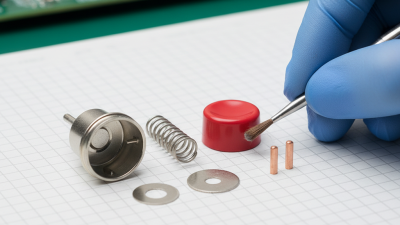
Why Choose a Momentary Push Button Switch for Your Projects?

In the realm of electronic projects, choosing the right components is crucial. The Momentary Push Button Switch is a popular choice among hobbyists and professionals alike. This switch offers a simple yet effective way to control devices. Its design allows for temporary activation, making it intuitive and user-friendly.

Using a Momentary Push Button Switch can enhance your project significantly. It provides a reliable mechanism for various applications, from DIY gadgets to complex machinery. Many appreciate its tactile feedback, which confirms activation. However, one must consider its limitations. For instance, it won’t function well in applications requiring constant power.

With experience and insight, we understand the importance of quality in switch selection. Not all Momentary Push Button Switches are created equal. Factors like durability and electrical ratings should be examined. Selecting a high-quality switch ensures reliability in the long run. Reflect on your project requirements, and make an informed decision.
Why Choose a Momentary Push Button Switch for Your Projects?

Benefits of Using Momentary Push Button Switches in Electronic Design

Momentary push button switches offer unique advantages in electronic design. These switches only remain active while pressed, providing precise control for various applications. This feature is ideal for devices requiring temporary signals. For instance, they are often used in control panels and keyboards, enhancing user interaction.

The tactile feedback from these switches can significantly improve usability. Users appreciate a satisfying click when activating a function. This aspect can lead to a more engaging experience. Designers also benefit from the compact size of these switches. Their small footprint allows for efficient use of space in tighter layouts. However, it's essential to consider their limitations. Accidental activation can occur if not positioned correctly, leading to unintended outcomes.

Incorporating momentary push button switches in projects encourages innovative thinking. Designers must explore creative ways to utilize them effectively. Evaluating how they fit into overall ergonomics is vital. The design must accommodate user habits and preferences. Failure to assess these factors can hinder project success.

Key Specifications and Types of Momentary Push Button Switches

Momentary push button switches are essential in many electronic projects. These switches are designed to complete a circuit only while they are pressed. Once released, they return to their original state. This function is crucial for applications requiring temporary activation, such as in remote controls or gaming devices.

Understanding the types and specifications of these switches can help in selecting the right one. There are several types available, including normally open (NO) and normally closed (NC) switches. NO switches allow current to flow only when pressed. NC switches do the opposite. Each type serves different functions based on project requirements. Consider the voltage rating and current load of your circuit when making a choice.

Installing a momentary push button switch can be straightforward. However, factors like casing, mounting style, and aesthetic can complicate the selection process. It’s vital to think about how these elements fit your project's design and usability. Mistakes in these details can lead to functionality issues. Testing your setup before finalizing is always a wise decision.

Industry Applications of Momentary Push Button Switches

Momentary push button switches are essential in various industries. Their simplicity and effectiveness make them ideal for many applications. In automotive systems, these switches control everything from headlights to window adjustments. The tactile feedback they provide allows users to operate controls quickly and intuitively.

Additionally, these switches are crucial in home appliances. Devices like microwaves and coffee makers often rely on momentary switches. Users appreciate their responsiveness. In medical equipment, these switches serve a critical role as well. Accurate control can mean the difference in patient care. Each press can deliver precise operations in life-saving devices.

Despite their advantages, users should consider the durability of these switches. Over time, repeated use can wear them down. Choosing switches that meet specific project requirements becomes crucial. Conducting thorough research ensures optimal selection for both safety and functionality. This reflection can enhance project outcomes significantly.

Why Choose a Momentary Push Button Switch for Your Projects? - Industry Applications of Momentary Push Button Switches

Application Area Functionality Advantages Common Types
Consumer Electronics Powering devices on/off Compact size, easy installation Tactile switches, Dome switches
Industrial Machinery Control panel operations Durability, long lifespan Illuminated switches, Weatherproof switches
Automotive Various control functions Reliability, responsiveness Momentary rocker switches, Push-to-start switches
Home Automation Light and appliance controls Convenience, user-friendly Smart switches, Remote control switches
Gaming Game console controls Enhanced user experience Arcade buttons, Customizable keypads

Comparative Analysis: Momentary vs. Latching Push Button Switches

When selecting push button switches for your project, understanding the difference between momentary and latching switches is crucial. Momentary push buttons are designed to send a signal only when pressed. Once released, the circuit opens again. This feature is beneficial in applications where temporary control is required. For instance, they are often used as reset buttons or in control panels for critical functions.

On the other hand, latching switches maintain their state after being pressed. They toggle between on and off with each press. This can be useful in situations requiring a more permanent activation. However, it might lead to accidental activations if not designed carefully. Sometimes, the decision may come down to user preference or specific project needs.

Tip: Consider your project's operational requirements. If you need precise and temporary control, a momentary switch may be ideal. But if you prefer convenience and a persistent state, opt for a latching type. Always review your circuit layouts. A well-planned design can prevent issues later on.

Lastly, testing your designs is paramount. Sometimes, even small variations in switch behavior can lead to unexpected results. Reflect on your choices, and don’t hesitate to iterate on your designs until they meet your application's needs.

Best Practices for Integrating Momentary Push Button Switches in Circuits

When integrating momentary push button switches into circuits, consider their intended use. These switches provide a temporary connection, making them ideal for applications where short bursts of power are necessary. They can control everything from simple lights to complex electronics. Understanding your project helps in selecting the right switch.


Proper placement of these buttons is crucial. They should be accessible and intuitive for users. Consider ergonomics; an uncomfortable switch can lead to user frustration. Testing different switch placements can guide you to the best option. Additionally, pay attention to circuit design. Secure connections reduce the risk of failure.


While momentary switches are versatile, they are not infallible. Over time, excessive use can lead to wear. It's essential to factor in durability when planning your project. Not all switches are created equal. Some may have a shorter lifespan than expected. Evaluate your options carefully to ensure reliability in critical applications.