What is a Micro Switch Button and How Does it Work?
A Micro Switch Button is a small yet powerful component used in various devices. Its primary function is to ensure reliable circuit control. These buttons are common in appliances, toys, and industrial machines. They operate based on mechanical movement. When pressed, the switch closes or opens a circuit. This simple action is crucial for functionality.
Many underestimate the importance of a Micro Switch Button. Yet, without it, devices might fail to operate correctly. The button's design allows it to withstand thousands of cycles. This durability is essential in high-use environments. However, users must consider factors like sensitivity and response time. Each choice can impact device performance and longevity.
While Micro Switch Buttons are reliable, they can be prone to failure. Factors like dust and moisture may compromise their function. Regular maintenance is often necessary to ensure they work as intended. Understanding how these switches function can lead to better device design. Ultimately, the Micro Switch Button plays a vital role; recognizing its significance can enhance device reliability.
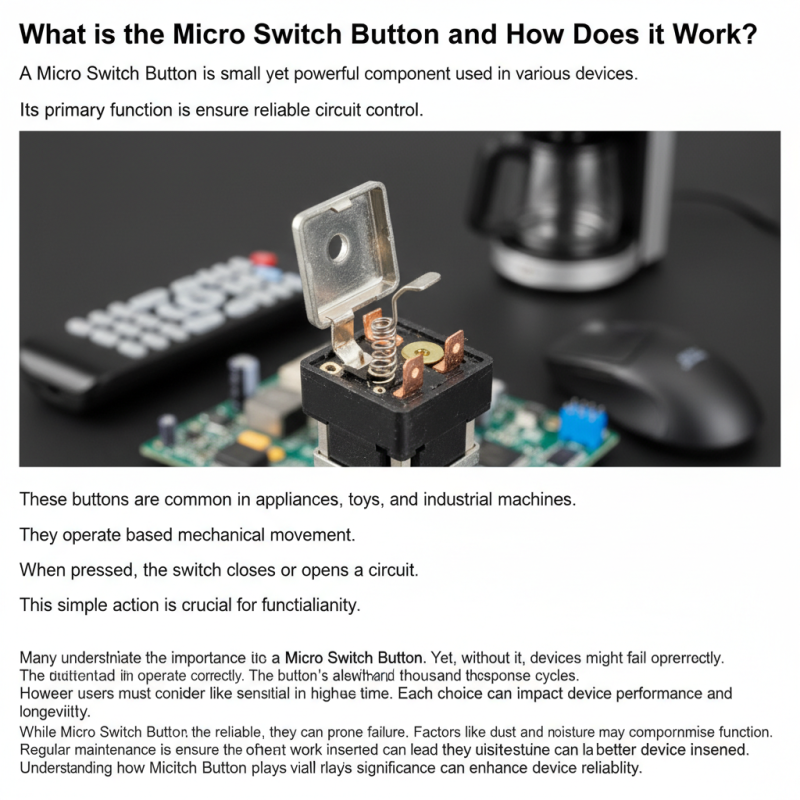
What is a Micro Switch Button?
A micro switch button is a type of electromechanical switch widely used in various applications. It is designed to be activated by a small amount of force. Micro switches often feature a quick action mechanism, which allows them to change states quickly with minimal travel. They are common in appliances, safety devices, and automotive systems.
According to industry reports, the global micro switch market is expected to see significant growth. By 2025, it is projected to reach approximately $2.5 billion. This growth is driven by increasing automation in manufacturing and the rising demand for advanced safety features. Micro switches offer reliability, durability, and a long lifespan, which enhances their appeal.
These buttons can have issues, though. Sometimes, they can be overly sensitive, triggering with slight pressure. This could lead to false activation. Additionally, contaminants can affect their functionality. Dust and moisture can cause switches to malfunction or wear out faster. Understanding these drawbacks is essential for manufacturers and users alike.
Micro Switch Button Usage Statistics
Components of a Micro Switch Button
Micro switch buttons are critical in many electronic devices. Understanding their components can provide insight into their functionality. A typical micro switch consists of a housing, actuator, terminal, and contact mechanism. Each part plays a role in enabling the switch to operate efficiently.
The housing is usually made from durable plastic, protecting the internal components. It ensures stability in various environments. The actuator is the part that users directly interact with. It can be a lever or button, directly affecting how easily the switch activates. The terminal connects with circuitry, facilitating electrical flow. A report from the Electronic Switches Association states that micro switches can last over 1 million cycles, showcasing their reliability.
The contact mechanism is critical for performance. It includes materials like
gold or
silver for better conductivity. However, wear and tear can occur over time. A study indicated that
23% of micro switches fail due to contact corrosion. This highlights the importance of quality materials in manufacturing. Despite their small size, each component greatly influences the overall effectiveness of micro switch buttons.
How Does a Micro Switch Button Operate?
A micro switch button is a small, highly sensitive switch. It operates through a mechanical actuator. This actuator, when pressed, creates a direct connection between the contacts inside the switch. The magic lies in its quick response. A slight touch can activate it, enabling precise control.
When you press the button, it activates the internal mechanism. This sends an electrical signal through the circuit. It's essential in various applications, like home appliances. The benefit of a micro switch is its reliability. They can handle millions of cycles without failure.
**Tip:** Keep micro switches clean. Dust can hinder their responsiveness. Regular maintenance can extend their lifespan.
Micro switches also come with a unique characteristic. They can be activated with minimal force. However, this sensitivity can be a double-edged sword. Sometimes, accidental touches can trigger them unintentionally.
**Tip:** When designing with micro switches, consider their placement carefully. Avoid locations where accidental activation is likely. A slight miscalculation can lead to unintended results.
Common Applications of Micro Switch Buttons
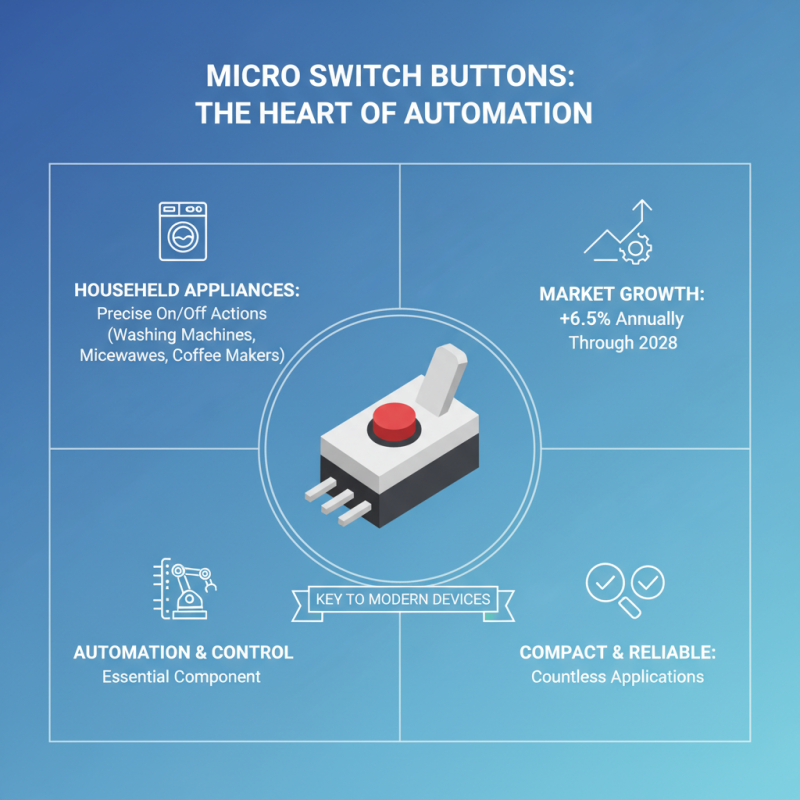
Micro switch buttons are essential components found in various devices. Their compact and reliable nature makes them suitable for countless applications. One common use is in household appliances. These buttons allow for precise on/off actions. They are widely used in washing machines, microwaves, and coffee makers. According to a recent market report, the micro switch market is projected to grow by 6.5% annually through 2028. This growth reflects their increasing importance in automation.
Another significant application of micro switches is in automotive systems. These buttons control critical functions like headlights and safety mechanisms. For instance, a micro switch can activate a car trunk. Their ability to handle high cycles makes them ideal for such tasks. It’s crucial to choose switches rated for specific applications to ensure longevity and safety.
Tips: Always check the switch's specifications before installation. Consider the environmental factors, such as temperature and humidity, which may affect performance. Regular maintenance can prevent unexpected failures. Reflect on the risk of using unsuitable switches. Proper selection is key to reliability in various applications.
Benefits of Using Micro Switch Buttons in Devices
Micro switch buttons are compact devices that offer precise control in various electronic systems. Their applications span household appliances, automotive systems, and industrial machinery. One significant benefit of using micro switch buttons is their reliability. Reports indicate that they can last over one million cycles, making them a durable choice for many devices. This longevity enhances device lifespan and reduces maintenance costs.
Another advantage lies in their versatility. Micro switches can operate with minimal pressure, making them ideal for sensitive applications. Their small size allows for easy integration into tight spaces, and they can be configured for numerous functions. For instance, they can serve as limit switches, detecting an object's position within a system. This adaptability makes them invaluable in automation processes.
**Tip:** When integrating micro switch buttons, consider their actuation force. Choosing the right amount of force can optimize performance.
It's also worth noting that, while these switches are reliable, installation quality is crucial. Poor installation may lead to premature failure. Ensuring proper alignment and support during installation can mitigate this risk. Regular maintenance checks can further enhance their functionality and overall system health.
What is a Micro Switch Button and How Does it Work? - Benefits of Using Micro Switch Buttons in Devices
| Feature |
Description |
Benefits |
Common Applications |
| Contact Mechanism |
Uses a physical lever to open or close the circuit. |
Reliable and accurate switching action. |
Home appliances, industrial machines. |
| Size |
Compact and lightweight design. |
Ideal for space-constrained devices. |
Automotive applications, control panels. |
| Durability |
Designed to handle millions of operations. |
Long lifespan reduces maintenance costs. |
Medical devices, vending machines. |
| Operating Force |
Requires a specific amount of force to activate. |
Ensures user-friendly operation. |
Consumer electronics, robotics. |
| Electrical Ratings |
Available in various voltage and current ratings. |
Versatile for different electrical applications. |
Home controls, power tools. |