How to Choose the Best Waterproof Rocker Switch for Your Needs?
Choosing the best waterproof rocker switch can be daunting. With various options available, it’s crucial to understand your needs. According to Mark Harmon, an industry expert in electrical components, "The right waterproof rocker switch can make or break your project." His insights emphasize the importance of selection.
A waterproof rocker switch must withstand harsh conditions. Look for materials that resist corrosion and wear. Consider the voltage and current ratings. These factors impact performance and longevity. Ensure it fits your specific applications, whether for marine use or outdoor equipment.
Many users overlook details such as size and mounting options. These aspects can affect installation and accessibility. The market is filled with choices, yet not all satisfy quality standards. Investing time in research can lead to better decisions. Remember, a poor choice may lead to frequent replacements or malfunctions.
Understanding the Importance of Waterproof Rocker Switches
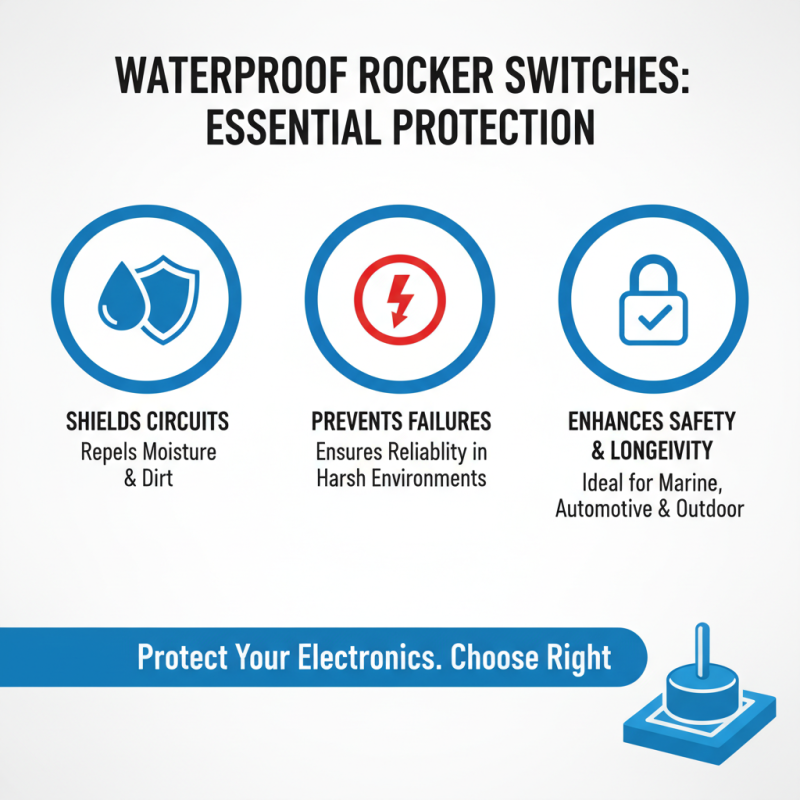
When it comes to waterproof rocker switches, understanding their importance is crucial. These switches protect electrical circuits from moisture and dirt. In harsh environments, exposure to water can cause failures or even hazards. Industries like marine, automotive, and outdoor applications benefit from using reliable switches. The right waterproof rocker switch can enhance safety and ensure longevity.
Choosing the right switch involves knowing the IP rating, which defines its dust and water resistance. An IP67 rating means the switch can withstand temporary immersion in water. This is essential for places prone to rain or splashes. Inspect the material as well. High-quality plastics or stainless steel can provide added durability. Sometimes, buyers overlook these factors, risking performance.
While selecting, remember that not all waterproof switches fit every need. Testing switches under real-life conditions can reveal limitations. User feedback often highlights flaws not mentioned in specifications. Being mindful of these details can lead to better decisions. A switch that seems perfect on paper might not perform well in the field. Choose wisely to ensure a dependable solution.
Identifying Your Specific Application and Environment Needs
When selecting a waterproof rocker switch, understanding your specific application is crucial. Consider the environment in which the switch will operate. Will it face extreme temperatures, humidity, or dust? For marine applications, for example, the switch must withstand saltwater exposure. Such conditions can significantly affect the switch's performance and lifespan.
Next, think about the electrical requirements. The switch must handle the voltage and current of your application. Incorrect specifications can lead to failures. Assess whether you need a momentary or maintained action switch. This choice can impact the functionality and ease of use. Also, pondering about the placement is important. Ensure it is easily accessible, yet protected from potential damage.
Lastly, don't overlook the aesthetic and ergonomic aspects. The switch should fit well with your design. It should be easy to operate, even in adverse conditions. Be mindful that in real-world scenarios, switches may not perform as expected if overlooked. Testing in actual conditions can reveal unexpected challenges.
Evaluating Key Features of Waterproof Rocker Switches
When selecting a waterproof rocker switch, it’s vital to evaluate essential features to ensure it meets your specific requirements. Focus on the IP rating, which indicates its resistance to dust and water. An IP68 rating signifies total protection against dust and submersion in water beyond one meter. According to industry reports, using switches with lower ratings can lead to failures, especially in outdoor or marine environments where exposure to elements is frequent.
Durability is another critical aspect. Look for materials that resist corrosion and temperature fluctuations. For instance, switches made of high-grade plastics or stainless steel can significantly enhance longevity. Studies indicate that switches with robust enclosures can last up to 10 years longer in harsh conditions compared to their standard counterparts.
Consider the circuit specifications, too. Elements like voltage and current ratings should match your system's requirements. It’s not uncommon for users to overlook this, leading to circuit failures or even safety hazards. Lastly, ergonomics plays a role, as ease of use can affect functionality in real-world applications. A well-designed rocker switch not only improves user experience but can also prevent operational inefficiencies.
Waterproof Rocker Switch Features Comparison
Comparing Different Types and Ratings of Waterproof Rocker Switches
When selecting waterproof rocker switches, understanding the different types and ratings is essential. Waterproof rocker switches come in various designs, each suited for specific applications. Look for switches that meet your environment's demands. Common types include sealed and unsealed switches. Sealed switches provide superior protection against water and dust, making them ideal for outdoor use.
Ratings play a critical role in choosing the right switch. Pay attention to the IP (Ingress Protection) rating. For instance, an IP68 rating ensures complete protection against dust and submersion in water. However, you might encounter ratings that seem exaggerated. Always evaluate the manufacturer’s documentation carefully. Don't assume that a higher rating guarantees better performance.
Consider your specific needs. Not every application requires the highest rating. Think about factors like voltage, current, and frequency of use. Sometimes, lower-rated switches may suffice in less demanding environments. A thoughtful approach to these parameters can save you money and lead to better choices. An informed decision can improve functionality and safety in your project.
Tips for Installation and Maintenance of Waterproof Rocker Switches
When installing waterproof rocker switches, attention to detail is vital. These switches are commonly used in marine and outdoor applications, where exposure to water is inevitable. A report by the National Marine Manufacturers Association indicates that nearly 67% of boat owners prioritize weather-resistant components. This statistic underscores the importance of choosing reliable switches.
Proper installation techniques can significantly enhance the longevity of your rocker switches. Ensure all connections are tight and secure. The use of shrink tubing on wire connections can prevent moisture ingress. Additionally, applying dielectric grease can improve the seal against water intrusion. Remember to mount the switches in locations where they receive minimal direct exposure to water and debris.
Regular maintenance is another key element. Periodically inspect your rocker switches for signs of wear or corrosion. Any moisture in the housing can lead to failures. Addressing issues early can save costs and prevent malfunctions. If the switch feels sticky or unresponsive, it may require cleaning or replacement. By keeping an eye on these details, you enhance both performance and durability.
How to Choose the Best Waterproof Rocker Switch for Your Needs? - Tips for Installation and Maintenance of Waterproof Rocker Switches
| Feature |
Description |
Considerations |
| IP Rating |
Defines the level of protection against dust and water. |
Choose at least IP65 for outdoor use. |
| Current Rating |
Maximum current the switch can handle safely. |
Match with your device's current requirements. |
| Mounting Style |
Different styles include panel mount, surface mount, etc. |
Consider the installation space and method. |
| Operation Type |
Types include momentary, toggle, push-button, etc. |
Select based on the desired functionality. |
| Material |
Materials can affect durability and resistance. |
Look for corrosion-resistant materials for reliability. |
| Size |
Dimensions of the switch for compatibility. |
Ensure it fits your project requirements. |
| Price Range |
Cost can vary based on features and quality. |
Balance between budget and quality. |