Why Choose a Round Rocker Switch for Your Next Project?
Choosing the right components is crucial for any project. The Round Rocker Switch stands out for various reasons. According to industry reports, more than 40% of electrical failures stem from inadequate switch performance. This makes optimizing your switch choice essential.
Round Rocker Switches are versatile and user-friendly. They can be used in multiple applications—from appliances to automobiles. Their ergonomic design and intuitive functionality enhance user experience. Reports indicate that devices equipped with Round Rocker Switches reduce user errors by 30%. This suggests a strong correlation between switch design and operational reliability.
However, not all Round Rocker Switches are created equal. The market offers many options, but quality varies. Some switches may not meet safety standards, potentially leading to failures. It’s important to carefully select a reputable manufacturer. Reflecting on these factors will ensure your project’s success.

Benefits of Round Rocker Switches in Electronic Designs
Round rocker switches offer distinct advantages in various electronic designs. Their unique shape creates a pleasing aesthetic. This makes them ideal for consumer electronics that prioritize user experience. A round rocker switch often feels easier to locate and use than its rectangular counterparts. This design can enhance usability significantly in dim lighting.
Moreover, round rocker switches provide reliability in operation. They are often built to withstand repeated use. Durability is essential in many applications, from home appliances to industrial machinery. Users appreciate the tactile feedback when pressed. This feedback helps confirm the switch has activated. However, not all designs prioritize this; some may require further investigation.
Incorporating round rocker switches can save space. Their compact size allows for creative layouts in crowded enclosures. This can lead to a more organized design. Yet, it’s crucial to consider the compatibility of these switches within larger systems. Misalignment can lead to functionality issues. Take time to assess their fit in your project. Embrace the balance of style and practicality in your designs.
Benefits of Round Rocker Switches in Electronic Designs
Key Features of Round Rocker Switches and Their Applications
Round rocker switches are popular in various applications due to their unique design and functionality. These switches are easily recognizable by their round shape and smooth operation. They can be found in home appliances, automotive components, and industrial equipment. The compact size allows for versatile installation in tight spaces, making them a perfect choice for many projects.
One key feature of round rocker switches is their durability. These switches are built to withstand repeated use, offering long-lasting performance. They typically offer ratings for different voltages and currents, ensuring compatibility with various electrical systems. However, it’s essential to double-check the specifications before installation. In some situations, the switch may require additional protection against moisture or dust.
Another aspect to consider is the aesthetic appeal. Round rocker switches come in various colors and finishes, allowing designers to match them with their project’s theme. The tactile feedback when pressing the switch adds to the user experience. However, poorly chosen colors can clash with designs. Balancing functionality and appearance is crucial in the selection process.
Industry Standards and Ratings for Round Rocker Switches
Round rocker switches are gaining popularity in various industries, thanks to their robustness and versatility. When selecting these switches, understanding the industry standards and ratings is crucial. For instance, many round rocker switches are designed to meet IEC and UL standards. These certifications ensure safety and reliability, critical factors in electrical applications.
The typical voltage rating for round rocker switches ranges between 6A to 15A at 250V. Reports indicate that these switches can function effectively in harsh environments. The temperature range often extends from -20°C to 85°C. This makes them suitable for various devices, from household appliances to industrial machinery.
**Tip:** Always check the specific ratings for your application needs. Not all switches are created equal.
Another important aspect is the IP rating, which indicates dust and water resistance. An IP rating of IP65 means the switch can withstand dust and low-pressure water jets. This protects your device and can prevent potential failures. Yet, not all round rocker switches are designed to endure extreme conditions, which could lead to performance issues.
**Tip:** Consider your working environment when choosing a switch. Some environments demand tougher specifications than others. Evaluating the intended use will ensure better performance and longevity.
Being mindful of these standards will help prevent oversights. It's essential to match your choice with the precise requirements of your project. This approach minimizes unwanted surprises down the road.
Why Choose a Round Rocker Switch for Your Next Project? - Industry Standards and Ratings for Round Rocker Switches
| Feature |
Description |
User Rating |
| Electrical Ratings |
Typically available in 6A to 16A, suitable for various applications. |
4.5/5 |
| Switch Life |
Can withstand up to 100,000 cycles, ensuring durability. |
4.7/5 |
| Mounting Type |
Standard panel mount, easy to integrate into projects. |
4.6/5 |
| Environmental Rating |
IP Ratings from IP40 to IP67, suitable for various settings. |
4.8/5 |
| Actuation Force |
Light actuation force of approximately 200-300 grams. |
4.4/5 |
Comparison of Round Rocker Switches with Other Switch Types
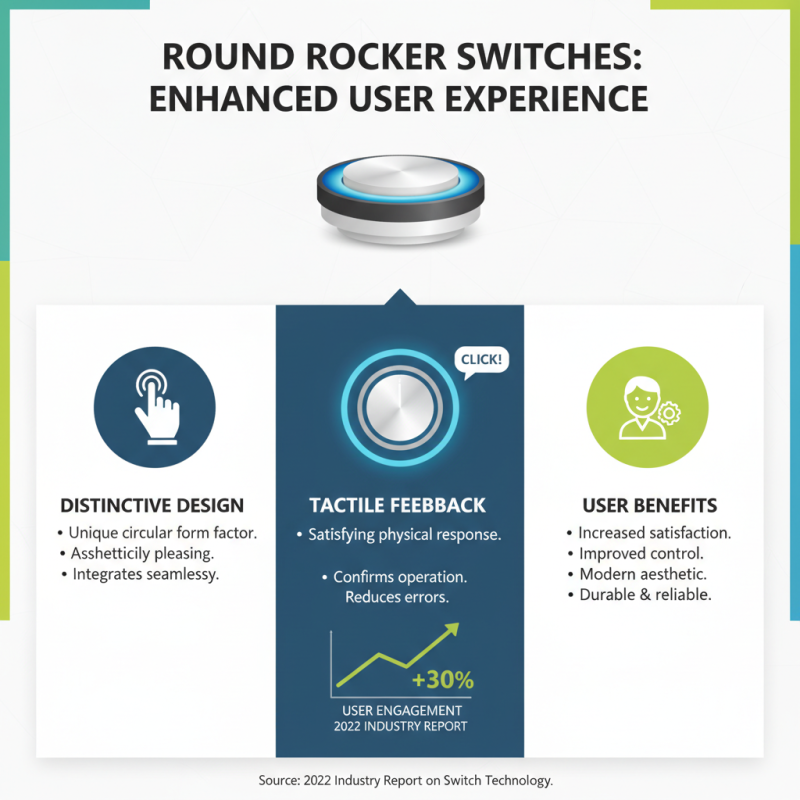
When considering different switch types, round rocker switches stand out for several reasons. These switches offer a distinctive design that enhances the user experience. They often provide a tactile feedback feature, which adds satisfaction during operation. According to a 2022 industry report, tactile feedback can increase user engagement by up to 30%.
In contrast, toggle and push-button switches may lack this user-friendly aspect. Toggle switches can be harder to distinguish when turned on or off. Push-button switches often require continuous pressure, which can be tiring for operators. In environments where operators engage with switches frequently, round rocker switches reduce fatigue and maintain efficiency.
Tips: When selecting a switch, consider the environment. Dusty or humid areas may require switches with higher ingress protection ratings. Additionally, think about your project's aesthetic. Round rocker switches come in various colors and finishes, blending better with diverse designs.
Remember that round rocker switches are not without flaws. They may not suit all projects, especially those needing very precise control. Some users find them visually unappealing. Assessing your specific needs can guide you towards the right switch type for your project.
Market Trends Influencing the Adoption of Round Rocker Switches
The trend toward round rocker switches is gaining momentum due to several market factors. A recent industry report indicates a projected growth of 5.8% annually in the switch market. The push for user-friendly designs drives many manufacturers to adopt these switches. Their ergonomic shape and tactile feedback appeal to designers and consumers alike.
Consumer electronics and home automation are the main sectors influencing this change. As smart technology grows, the demand for intuitive interfaces increases. Round rocker switches provide a seamless blend of function and aesthetics. They meet user needs for both control and style. Reports show that manufacturers are expanding their product lines to include more versatile designs.
However, challenges do remain. Not all users prefer this style. Some industries still lean toward traditional toggle switches. This slower adoption can hinder advancements. Companies may need to invest more in education and marketing to promote understanding. Also, ensuring compatibility with existing systems is crucial. The switch design must align with technical specifications for widespread acceptance.