A Waterproof Toggle Switch can look dependable on a product page and still fail when water reaches its terminals. Global buyers need more than a sealed-looking boot. They need clear specifications, consistent production, and evidence that the switch suits the actual environment. A damp control panel, a pressure-washed machine, and a vessel exposed to spray are not the same test.
This guide compares options through practical details: ingress-protection claims, rated voltage and current, terminal design, mounting dimensions, operating temperature, and available test documentation. Check the complete assembly, not just the actuator. A gasket may seal the panel opening while moisture still enters through the rear terminals. Small detail. Costly lesson.
A trustworthy expert quotation needs a verifiable source, and none was provided for this request. Rather than invent an attribution, this guide uses a practical engineering principle: “A waterproof rating matters only when the installed switch matches the conditions behind that rating.” That is a useful reminder, not a sourced quotation. Buyers should verify test conditions and supplier records before comparing products. Even then, specifications can leave questions unanswered; samples and installation checks may reveal issues that a catalog cannot.
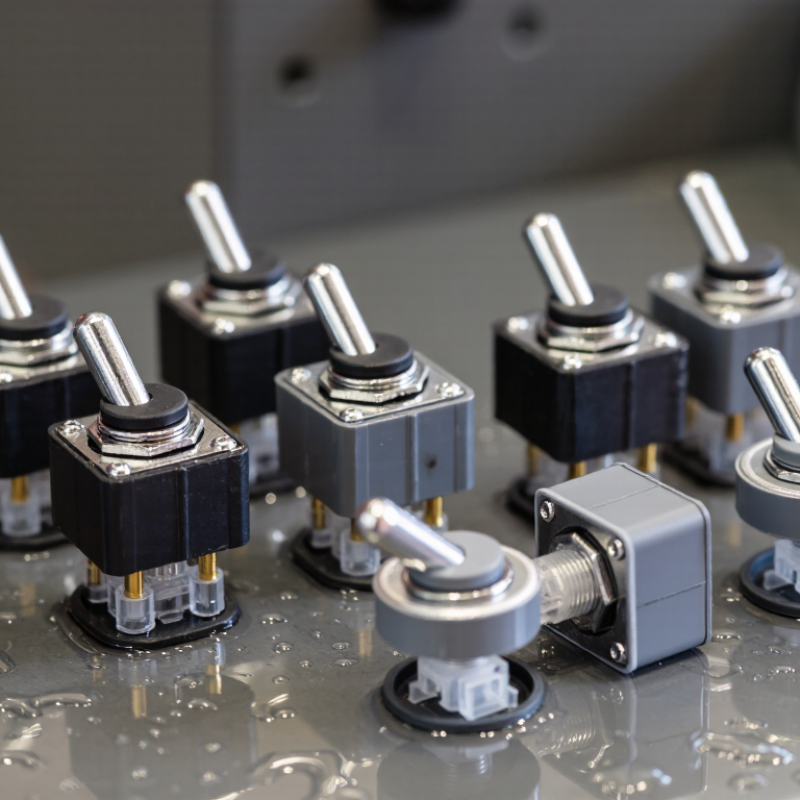
A toggle’s lever tells you how it is operated, not how its contacts are arranged. Poles describe how many separate circuits the switch controls. Throws describe how many output paths each pole can select. A single-pole, single-throw switch simply opens or closes one circuit. A single-pole, double-throw version can connect one input to either of two outputs. Check the wiring diagram; appearance alone can mislead.
For a waterproof application, match the pole and throw configuration to the circuit, then examine the sealing evidence. A rating such as IP67 describes resistance to specified dust and water exposure under stated test conditions. It does not automatically confirm safe switching at every voltage, current, or temperature. Details matter. Ask for the test conditions, terminal type, electrical rating, and installation limits. A sealed body can still be compromised by a loose mounting nut or damaged panel gasket.
IEC 61058-1 addresses safety and performance for switches within its appliance-switch scope. It is not, by itself, proof that a toggle switch is waterproof, nor does its scope cover every industrial control application. Confirm that the exact product and intended use fall within the applicable standard and edition. This distinction is easy to miss. I would also verify whether testing covers the complete assembled switch, including its actuator and panel seal; product sheets do not always make that clear.
For buyers comparing waterproof toggle switches, IP67 offers a clear baseline. The first digit, 6, means the enclosure is dust-tight under the specified test. The second digit, 7, indicates protection during temporary immersion in water. The familiar reference is up to 1 metre for 30 minutes, under defined laboratory conditions. Brief exposure counts.
That rating does not promise survival in every installation. A switch mounted through a thick panel may seal differently from one fitted to a thin, uneven surface. Check the panel cutout, gasket compression, nut torque, and cable entry. A sealed toggle can still leak at its mounting point. Small gaps matter. Salt spray, pressure washing, and repeated immersion are not the same as the IP67 test.
For purchasing, ask for test documentation covering the complete switch assembly, not just its cap or housing. Confirm how the rating applies after wiring and panel mounting. If the unit faces vibration or frequent outdoor cleaning, request application-specific guidance and inspect seals during maintenance. Real installations can be messy; a rating alone cannot show every weak point.
Compare the dust and water digits in common IP ratings. Each bar shows the rating digit, not a performance score.
IP67 decoded: The first digit, 6, means dust-tight. The second digit, 7, indicates protection against temporary immersion in water up to 1 m for 30 minutes under the specified test conditions. IP68 immersion conditions are agreed with the manufacturer and are not universally fixed.
A waterproof toggle switch is only as secure as its installed seal. A panel gasket compresses between the switch body and a flat, clean surface. Uneven cutouts, paint ridges, or loose mounting nuts can leave a narrow leak path. Check the specified panel thickness and tightening method, not just the product description.
A rubber boot covers the toggle and helps keep water and debris away from the actuator. It does not automatically seal the rear terminals or cable connections. Gaskets and boots also behave differently as they age: compression, heat, and repeated movement can affect fit. Small details matter. I would not assume a soft-looking boot proves long-term protection; its material and assembly need verification.
IEC 60529 ratings describe protection under defined test conditions, not every field situation. For example, dust and water tests use different procedures, and an IP rating applies to the tested configuration. Ask for the test report and confirm whether it includes the same boot, gasket, panel thickness, and mounting hardware you plan to use. Check the stated water exposure, orientation, and installation limits. A switch tested on a laboratory panel may not perform identically on a curved or uneven enclosure. That gap is easy to overlook.
A waterproof toggle switch still needs to match the circuit it controls. Check its rated voltage and current separately for AC and DC; these values are not interchangeable. A switch marked for 10 A at 250 V AC may have a lower DC rating. Small detail, big consequence. Also identify the load type. Motors, lamps, and other inductive loads can draw startup current beyond their steady operating current. Use the manufacturer’s load ratings, not just the number printed most prominently on the switch.
Tips: Compare the switch’s ratings with the equipment’s maximum operating and startup demands. Leave a sensible margin, and check the datasheet for temperature or load-related derating. Confirm whether the waterproof rating applies to the installed panel arrangement, including the seal and mounting surface.
In a compact control box, a toggle may switch a small motor rather than a simple resistive load. That difference can affect contact life and switching performance. I would double-check the exact AC or DC rating before ordering; product labels can make quick comparisons feel easier than they are. Also confirm pole count and terminal layout against the wiring plan. Waterproof protection does not guarantee electrical compatibility, and a close-looking rating is not necessarily a suitable one.
Global buyers should treat compliance documents as part of switch selection, not as a box to tick.
For a waterproof toggle switch, ask whether UL 508 applies to the complete assembly or related control equipment. Request the listing details, model scope, and conditions of use. Check that documents match the exact part number, terminal style, and electrical rating. Small differences matter.
RoHS 2011/65/EU documentation should identify the product and support its restricted-substance claims. Request a signed declaration and, where available, supporting material data or laboratory results. Ask for test reports showing sample identification, method, date, and laboratory details.
Reports should cover the actual enclosure and sealing arrangement, not just a similar-looking switch. Verify the stated ingress-protection rating against test conditions, including cable entry and mounting orientation. A clean PDF is not proof by itself.
Paperwork can look complete and still leave gaps. Compare each file with the shipment label and keep dated copies for incoming inspection. If a supplier cannot explain a mismatch clearly, pause approval and request clarification.
Deadlines can make that uncomfortable, but guessing is worse.