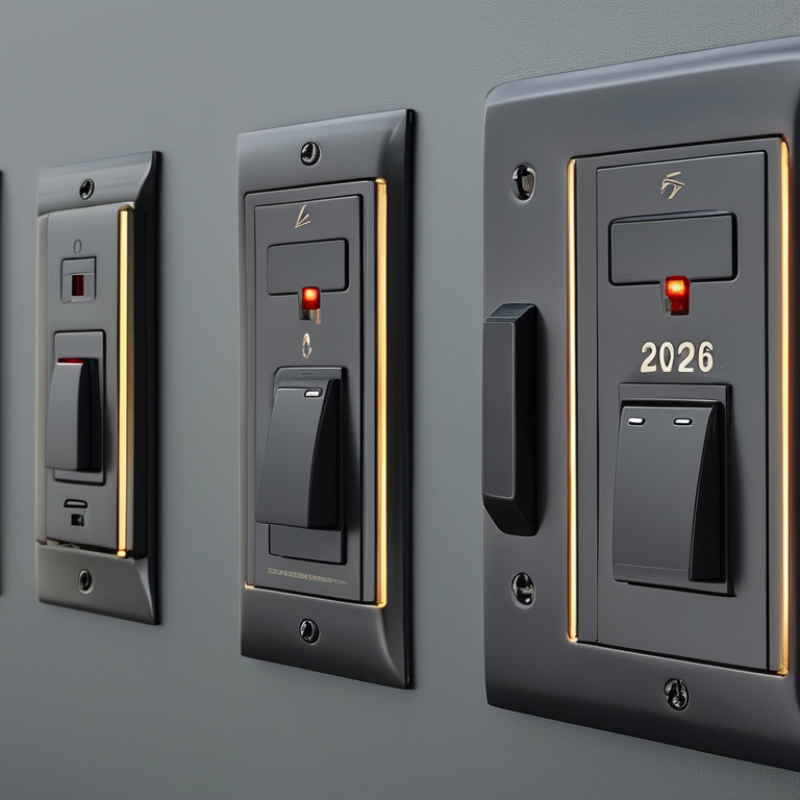
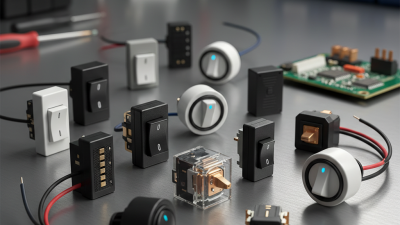
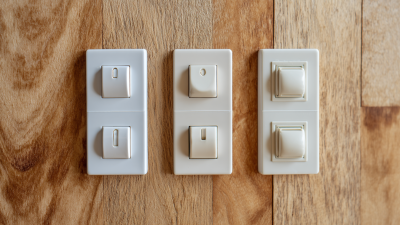
The 2026 market for Electrical Rocker switches is becoming more specialized, practical, and design-conscious. Homeowners now expect a clean, firm click, while installers prioritize dependable terminals, heat resistance, and clear load ratings. A switch may look simple, yet its internal contacts determine long-term performance. Small details matter.
This guide examines the leading rocker types expected to shape 2026 installations. Standard single-pole models remain useful for controlling one light from one location. Double-pole versions suit circuits requiring simultaneous control of two conductors. Illuminated rockers help users find a switch in a dark hallway, although their indicator lights may not suit every LED load. Momentary switches support doorbells, controls, and equipment panels. Smart rocker switches add scheduling and remote operation, but they require careful compatibility checks and, sometimes, a neutral wire.
Weather-resistant designs deserve attention in garages, workshops, and covered outdoor areas. Their sealed faces can resist dust and splashes, but “weather-resistant” does not mean waterproof in every installation. Always verify the manufacturer’s instructions, certification marks, terminal design, and rated voltage before purchase. Requirements differ by region, and a licensed electrician should assess uncertain wiring.
A neat ranking is impossible. Needs vary.
Some 2026 products may combine several categories, making comparison less straightforward. A stylish smart rocker can still disappoint if its app loses support or its relay cannot handle the connected load. This overview therefore balances appearance, tactile feedback, installation practicality, safety documentation, and expected service life. It focuses on informed selection rather than exaggerated predictions. The best type is usually the one that fits the circuit, environment, user habits, and verified technical requirements.
Electrical rocker switches are manual control devices that open, close, or redirect an electrical circuit. Their broad, slightly curved actuator rocks around a central pivot. Press one side, and the internal contacts change position. Simple, but not careless.
A typical switch contains an actuator, housing, spring mechanism, terminals, and conductive contacts. Some models include a small indicator lamp, while sealed versions add a gasket against dust and moisture. Common 2026 types include SPST for simple on/off control, SPDT for selecting between two circuits, and DPST for switching two lines together. Momentary rockers operate only while pressed. Latching rockers remain in position after release.
The core function is circuit control, but specifications determine safe performance. Check voltage, current, contact material, terminal style, and electrical life before installation. A 20-amp rating may apply only under a specific load type. Motors and LED drivers can create starting surges. Field experience shows that loose terminals often cause heat, discoloration, and early failure. Torque matters.
Illumination improves visibility in dark panels. Sealing helps outdoor or dusty equipment. Yet no switch suits every enclosure. A bright indicator can also introduce standby current, which may be undesirable in low-power systems. Installation should follow the equipment design and applicable electrical requirements. When uncertain, measure the real load instead of trusting appearance or catalog labels.
What Are the 2026 Top Electrical Rocker Types?
Key rocker switch types are changing with energy management, compact equipment, and safer user control. The IEA Electricity 2024 report forecasts global electricity demand to grow by 3.4% annually through 2026. That pressure encourages clearer switching and lower standby losses.
Illuminated rocker switches are gaining attention in dark cabinets, workshops, and vehicle interiors. Their small indicator window shows circuit status immediately. Sealed rocker switches with IP-rated protection suit kitchens, outdoor panels, and dusty machinery. Momentary rockers are useful for door controls, alarms, and testing equipment. Double-pole versions offer stronger isolation for selected loads. Smart rocker modules also support remote control, but wireless features can add failure points. That trade-off deserves more attention.
Tips: Match the switch to voltage, current, load type, and installation environment. Check IEC 61058-1 or the relevant local standard before purchasing. For wet areas, confirm the complete enclosure rating, not only the rocker’s label. A bright indicator may look helpful, yet it can create unwanted night-time glare. Test the switch under real load conditions. Datasheets sometimes simplify this part.
Key rocker switch configurations emerging in 2026, compared by their standard number of controlled poles and switching positions.
SPST switches control one circuit with one ON/OFF path, while SPDT switches select between two paths. DPST and DPDT designs control two circuits, making them suitable for dual-load isolation, polarity switching, and motor-control applications. Illuminated, momentary, and sealed IP-rated versions can be built around several of these configurations.
Electrical rocker switches are not interchangeable. A single-pole, single-throw switch controls one circuit, such as a lamp or ventilation fan. A single-pole, double-throw model directs one input toward two outputs. This suits source selection or low-voltage control. Double-pole versions open two conductors together, improving isolation in some equipment. Double-pole, double-throw types can reverse motor polarity or manage two circuits. The circuit decides the switch.
Application changes the design. Momentary rockers return when released, making them useful for alarms, actuators, and control panels. Illuminated versions improve visibility in dark enclosures, but their indicator circuit can affect leakage current. Sealed rockers need an appropriate IP rating under IEC 60529. Do not judge protection by appearance alone.
Demand is becoming more application-driven. The International Energy Agency’s Electricity 2024 report projects global electricity demand to grow by about 3.4% annually from 2024 through 2026. More connected equipment creates more local control points, but higher demand does not justify oversized switches. Check voltage, current, inrush, switching frequency, and load type against IEC 61058-1 requirements. A motor may exceed its running current briefly. That detail is easy to miss. In practice, circuit diagrams often look correct while terminal spacing, heat buildup, or moisture exposure remains unresolved. Selection should include those physical conditions, not only the visible rocker shape.
What Are the 2026 Top Electrical Rocker Types?
Safety Standards, Materials, and Smart Control Features
In 2026, leading rocker types include single-pole, three-way, dimmer, weather-resistant, and smart models. Selection should begin with the installation environment, not appearance. IEC 60669-1 covers switches for household fixed electrical installations. It addresses rated voltage, temperature rise, endurance, and insulation performance. NFPA’s Home Structure Fires report found electrical distribution and lighting equipment involved in about 24% of reported home fires from 2016 to 2020. That figure makes terminal security and heat control practical concerns.
Materials matter at the wall. Thermoplastic housings resist impact and moisture better than fragile low-grade plastics. Polycarbonate faceplates usually tolerate repeated cleaning and daily contact. Copper-alloy contacts support stable current flow when properly plated. Halogen-free materials can reduce corrosive smoke during fire conditions, but buyers should verify test documentation. A polished surface is not proof of safety.
Smart rocker switches now add remote control, scheduling, occupancy sensing, and energy monitoring. The IEA’s Electricity 2024 analysis shows global electricity demand continuing to rise through 2026, increasing interest in efficient control. However, connectivity can introduce setup failures and privacy concerns. Local control remains essential during network outages. Matter-compatible products may simplify interoperability, yet compatibility claims still require testing across devices. I have seen installations where an advanced switch performed worse than a simple dimmer because neutral wiring was missing. Better design is not always smarter.
| Rocker Type | Typical Application | Common Electrical Configuration | Typical Materials | Key Safety Standards or Requirements | Smart Control Features | Environmental Protection | Main Advantages | Important Limitations |
|---|---|---|---|---|---|---|---|---|
| Single-Pole On/Off Rocker | General lighting, receptacle control, and simple residential switching from one location. | Two-state mechanical switch; commonly rated for 120/277 V AC applications depending on the product design. | Thermoplastic or nylon faceplate, polycarbonate actuator, copper-alloy contacts, and steel or thermoplastic mounting yoke. | Applicable products are commonly evaluated to UL 20 or IEC 60669-1; installation must follow the applicable electrical code and load rating. | Usually none; may be paired with a smart relay or automation module installed in the electrical box. | Indoor dry locations unless specifically marked for damp or wet locations. | Low cost, simple operation, easy replacement, and broad compatibility with conventional loads. | Cannot control one load from multiple locations without additional switching hardware. |
| Three-Way or Two-Way Rocker | Controlling one light or load from two locations, such as hallways, staircases, and rooms with multiple entrances. | Three-way circuit in North American installations or two-way circuit in many IEC-based installations. | Flame-retardant thermoplastic body, molded insulating barriers, copper-alloy terminals, and corrosion-resistant screws. | Commonly assessed under UL 20 or IEC 60669-1; correct traveler or two-way wiring is essential for safe operation. | Can be combined with compatible smart switches, scene controllers, or auxiliary controls. | Normally intended for dry indoor locations; damp-location versions require explicit marking. | Convenient multi-location control without requiring a smart network. | Wiring is more complex than a single-pole circuit and must match the switch design. |
| Rocker Dimmer | Adjustable lighting levels in bedrooms, living areas, hospitality spaces, and offices. | Electronic phase-control device; may use leading-edge or trailing-edge control depending on the load and design. | Heat-resistant thermoplastic, aluminum heat sink, electronic components, copper terminals, and flame-retardant enclosure materials. | Common references include UL 1472 and IEC 60669-2-1; electromagnetic compatibility and thermal derating are important considerations. | Preset scenes, fade rates, remote control, scheduling, and energy-use monitoring may be available on connected models. | Indoor use is typical; damp-location suitability depends on the specific enclosure and installation instructions. | Improves lighting comfort and can reduce lighting energy use when properly matched to the load. | May require compatible dimmable LED lamps; neutral-wire requirements and minimum-load limits vary. |
| Occupancy or Vacancy Sensor Rocker | Automatic lighting control in bathrooms, utility rooms, corridors, classrooms, and offices. | Mechanical rocker control combined with passive infrared, ultrasonic, or dual-technology sensing. | Flame-retardant polymer housing, infrared lens or ultrasonic transducer, copper terminals, and electronic control components. | May be evaluated to applicable switch-control standards and energy-code requirements; sensor placement and field of view affect performance. | Time-delay settings, sensitivity adjustment, daylight harvesting, manual override, and network integration on advanced models. | Indoor dry or damp locations depending on the marked enclosure rating. | Reduces unnecessary operating time and provides automatic shutoff. | False activation, missed detection, or compatibility issues can occur if the sensor is poorly positioned. |
| Countdown Timer Rocker | Exhaust fans, bathroom lighting, heat lamps, and other loads that should switch off automatically. | Electronic or electromechanical timer with selectable time intervals and a manual rocker interface. | Flame-retardant thermoplastic, quartz or electronic timing components, copper-alloy contacts, and insulated terminals. | Applicable switch and timer safety requirements vary by jurisdiction; the connected load must not exceed the marked rating. | Preset schedules, remote countdown control, operating notifications, and automation routines may be included. | Commonly indoor; fan or bathroom applications require a model specifically rated for the location. | Helps prevent equipment from running longer than necessary and is easy for occupants to operate. | Some installations require a neutral conductor; motor and LED loads may have special compatibility requirements. |
| Wi-Fi or Thread Smart Rocker | Connected residential and light-commercial lighting control with app, voice, or automation access. | Electronic relay or solid-state switching with local manual control; communication may use Wi-Fi, Thread, or another supported protocol. | Flame-retardant polymer enclosure, touch or mechanical actuator, low-voltage power supply, relay, and insulated circuit board. | Look for recognized electrical safety certification, overcurrent protection, firmware-security practices, and installation requirements for the local voltage system. | Remote operation, schedules, scenes, geofencing, occupancy routines, energy monitoring, and integration with home-automation platforms. | Usually rated for indoor dry locations; outdoor or wet-area use requires a specifically listed enclosure. | Enables centralized control, automation, and remote status checking. | May depend on a neutral wire, network availability, software support, and secure account configuration. |
| Zigbee or Z-Wave Smart Rocker | Mesh-based home automation in homes, apartments, and small commercial installations. | Manual rocker interface with a low-power wireless radio and relay or dimming circuit. | Flame-retardant thermoplastic, copper-alloy terminals, radio module, isolated power supply, and electronic switching components. | Electrical safety listing, radio compliance, proper enclosure grounding, and local installation-code requirements apply. | Mesh networking, scenes, device-to-device automation, local control through a hub, and scheduled actions. | Generally intended for dry indoor locations unless marked otherwise. | Can continue local automation through a hub and may reduce dependence on direct cloud services. | Requires a compatible hub or controller and careful attention to wireless range and network security. |
| Weather-Resistant or Wet-Location Rocker | Patios, garages, workshops, exterior lighting, and locations exposed to moisture or weather. | Single-pole, multi-way, timer, or sensor switching with a sealed or protected front assembly. | UV-resistant polycarbonate or nylon, corrosion-resistant metal parts, elastomeric gaskets, and weatherproof cover components. | Must carry the appropriate wet-location or weather-resistant marking; installation generally requires a suitable box, cover, and grounding arrangement. | May include remote control, schedules, outdoor scenes, and sensor-based automation when the connected electronics are suitably rated. | Designed for damp or wet locations only when the complete installed assembly provides the required protection. | Improves durability and reduces moisture-related hazards when installed correctly. | A weather-resistant face alone does not make the entire installation suitable for direct water exposure. |
| Low-Voltage Momentary Rocker | Doorbells, access-control systems, relay inputs, machine controls, and signaling applications. | Spring-return contact that closes or opens only while the rocker is being pressed. | Thermoplastic actuator, insulated body, silver-alloy or copper-alloy contacts, and low-voltage terminal hardware. | Must be selected for the system voltage, current, insulation, and control-circuit requirements; it is not automatically suitable for line-voltage switching. | Event triggering, scene activation, access events, and integration with programmable control systems. | Indoor use is typical; protected or sealed versions are required for damp or outdoor areas. | Provides a clear trigger signal and returns to its normal state automatically. | Not interchangeable with a standard line-voltage rocker unless its electrical rating and application explicitly permit it. |
| Industrial Heavy-Duty Rocker | Workshops, control panels, machinery, utility equipment, and high-cycle commercial applications. | Maintained or momentary switching with higher mechanical endurance and application-specific current ratings. | Impact-resistant nylon or polycarbonate, reinforced mounting body, silver-alloy contacts, and plated or stainless-steel terminals. | Selection should consider the applicable industrial switch standard, enclosure rating, short-circuit protection, and the equipment control-panel requirements. | Remote status feedback, programmable control, fault reporting, and industrial network integration may be added through control hardware. | Available in protected, dust-resistant, oil-resistant, or sealed versions depending on the enclosure rating. | Designed for frequent operation and demanding environments. | Higher cost and larger physical dimensions are common; installation must account for heat, vibration, and ingress protection. |

Selection note: Always verify the product marking, voltage and current rating, load compatibility, enclosure rating, grounding method, and local electrical-code requirements before installation. Standards and approval requirements can vary by country and application.
Selecting an electrical rocker switch starts with the circuit, not its appearance. A single-pole, single-throw rocker suits simple on/off control, such as a small ventilation fan or work light. For two operating paths, a single-pole, double-throw model provides more flexibility. Check the voltage and current ratings carefully. A switch rated for household AC may not perform safely in a low-voltage DC system.
For equipment exposed to dust or splashes, choose a sealed rocker with an appropriate IP rating. Outdoor control panels may need gasket protection, covered terminals, and corrosion-resistant materials. An illuminated rocker improves visibility inside a dark cabinet, but its lamp circuit must match the system voltage. Momentary rockers work well for horns, test functions, and reset controls. They return to their original position after release.
High-current equipment requires more attention. Motors, pumps, and compressors can create a strong startup surge. A switch that matches the normal running current may still fail early. I have seen warm terminals reveal this mistake before the rocker itself stopped working. Terminal spacing, wire size, mounting depth, and panel thickness also matter during installation. Small differences can delay a project. Test the complete load under realistic conditions, because datasheets cannot show every heat, vibration, or wiring problem.